A professional journey
From visual design and the early web to product architecture, systems engineering and independent research. A selection of the work and decisions behind the thinking.
I began with visual design and illustration, developed my first website in 1994, and went on to work across software engineering, experience design, product architecture and research.
This is not an employment chronology or an exhaustive list of projects. It is a selection of the work, decisions and discoveries that shaped my approach. Several periods overlap because the work did too.
Design foundations · 1990s
The foundations were visual
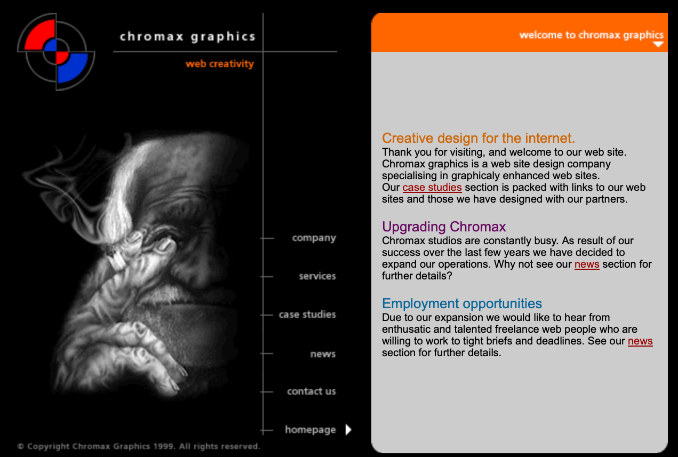
My background began with visual design and illustration, including traditional airbrush work. Through Chromax Graphics, my own design business, I carried that visual experience into an unfamiliar medium: the early web.
I developed my first website in early 1994. Much of the work that followed combined graphic design, typography, navigation and front-end implementation. Design was not something I added to software development later; it was already part of the way I approached problems.
1994–2000
Designing the emerging web
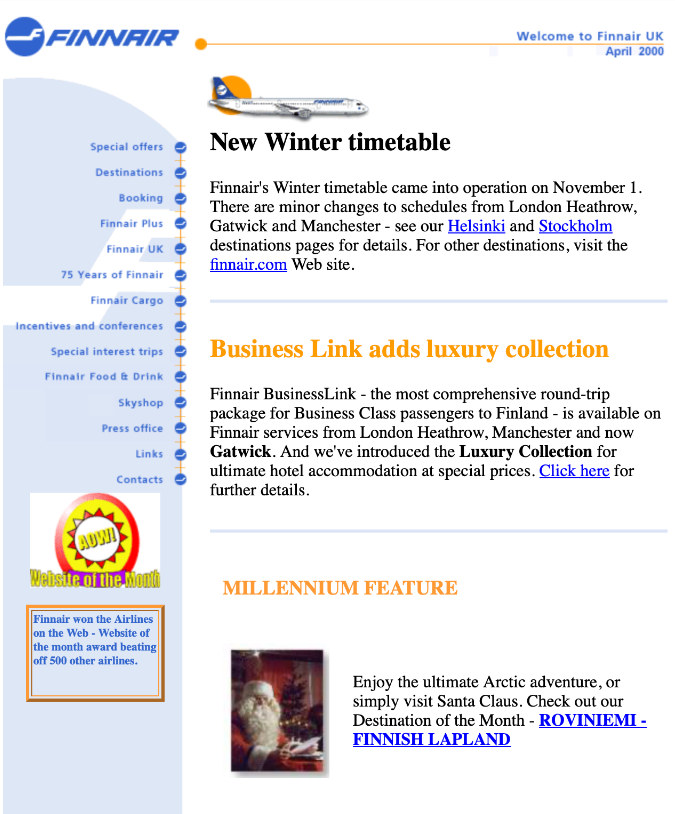
I worked on early websites for Fujitsu Europe and the Finnair Group, including Finnair UK, Norvista UK and Finnair Cargo. The passenger website won an industry website award, reflected in its archived design.
For Coconut Software in Jersey, I designed interfaces for the States of Jersey parliamentary voting system and Fetchmail, a working browser-based email client I also used myself. I designed Coconut’s “Powered by Coconut” battery graphic and believe I contributed to the related NewsFlash interface. I also undertook a substantial interface-design commission for CMG in London.
The interesting challenge was establishing useful visual and interaction conventions at a time when the web had relatively few established patterns.
Late 1990s–2007, with later commercial editions
From parliamentary publishing to WordServer
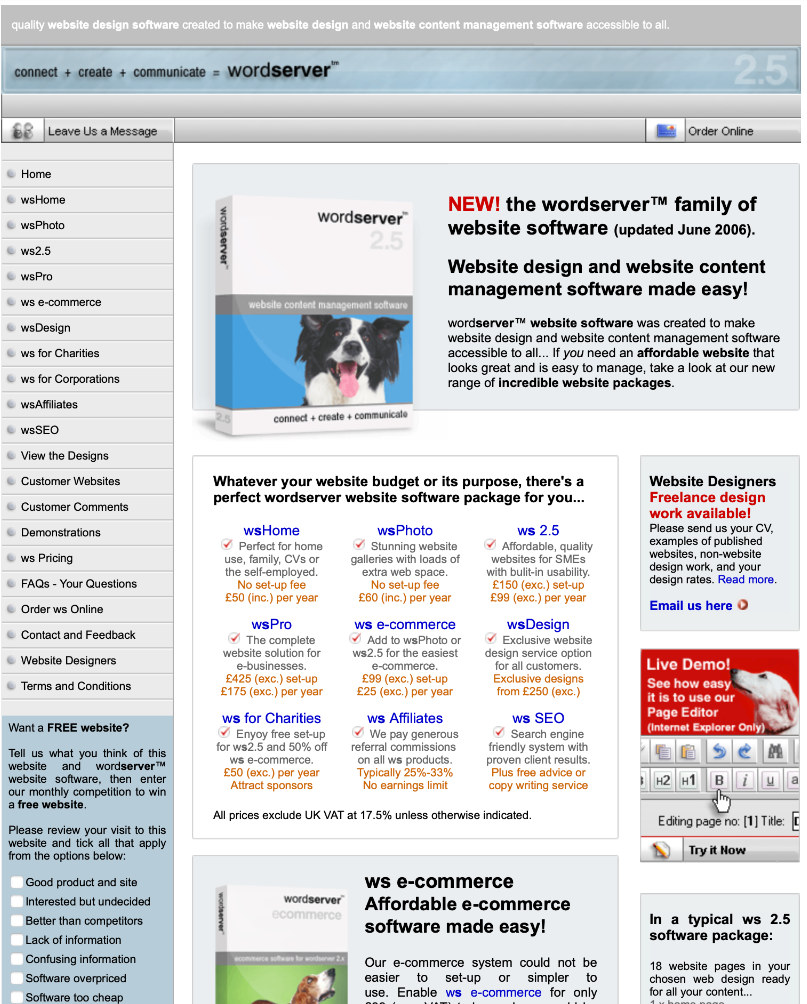
Working with my team, I developed publishing technology initially associated with making websites manageable for Members of Parliament. That work evolved into WordServer, a commercially offered content management system with different editions, customers and support.
By 2007, adapting and maintaining the whole platform offered diminishing returns compared with using an established, flexible system. I adopted WordPress and began using it both for websites and as the foundation for more sophisticated applications. The WordServer product itself remained visible in later historical records.
Early 2000s
Complex information, coherent experiences
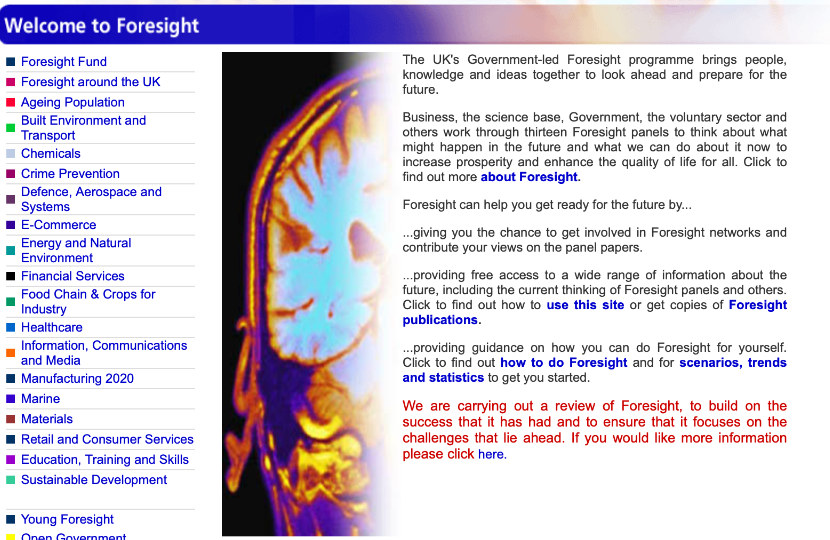
My consultancy for the Department of Trade and Industry’s Foresight programme involved presenting material from sixteen departmental teams. I took on visual design and technical development, worked closely with senior civil servants and delivered within the agreed time and budget.
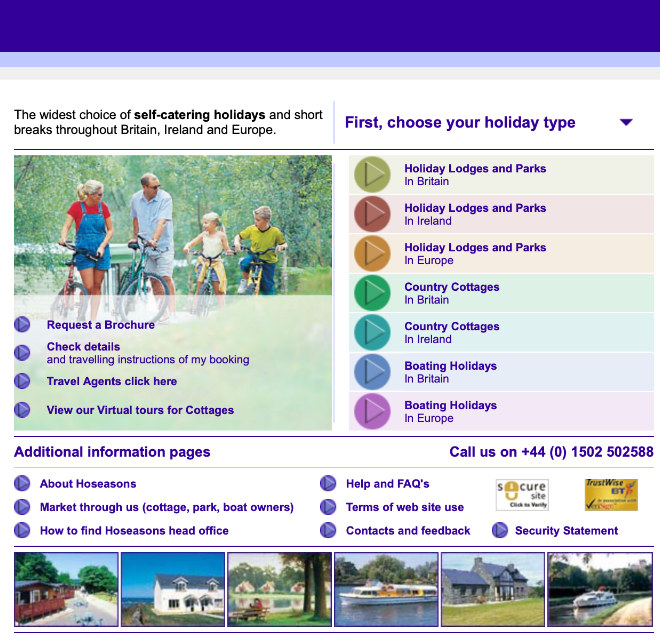
Other projects required equally careful information architecture. NorfolkBroads.com brought together a large regional directory and travel information, while our multi-year Hoseasons work translated around 50,000 QuarkXPress source files annually into structured XML and web-ready HTML. Hoseasons’ own technical team integrated the system with its mainframe and call-centre systems.
2000–2016
Connecting business processes and customers
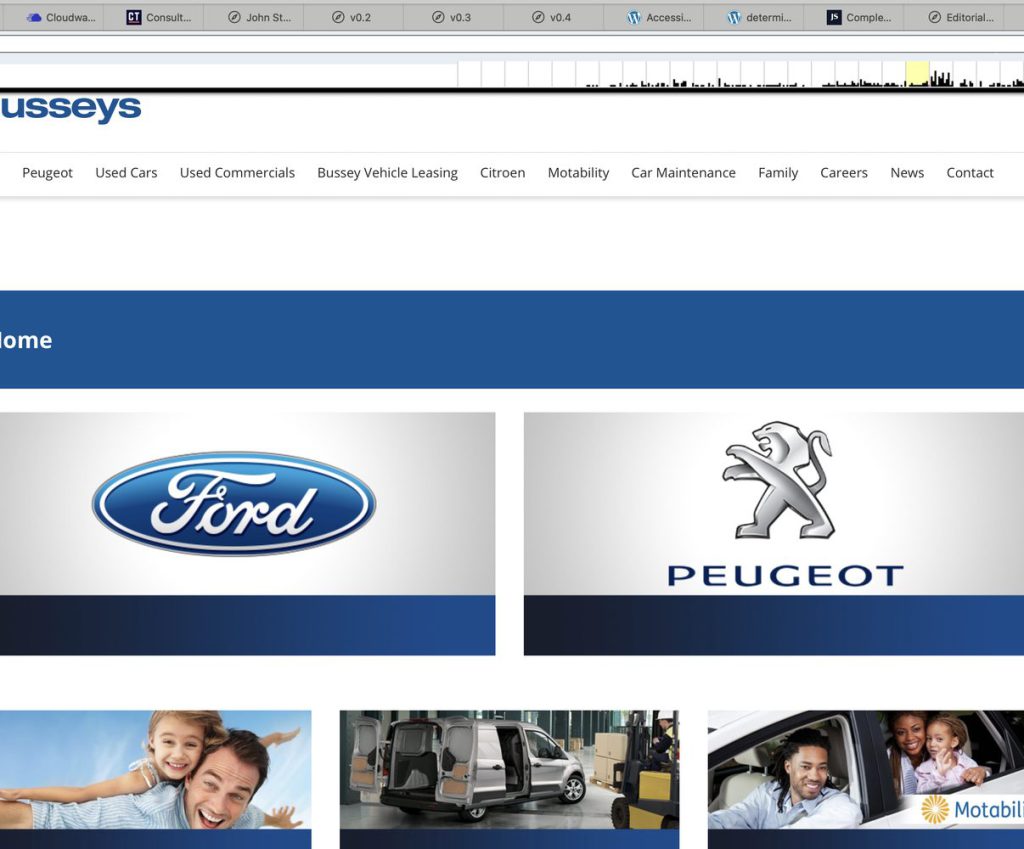
A long-running relationship with the Busseys dealership evolved from early websites into vehicle search, configuration, real-time finance choices, leasing and customer services. Later work included the Busseys Family loyalty application, supporting ownership information, service reminders, personalised communications and other practical facilities.
I also worked on specialist insurance platforms, including the interface for ActiveQuote and later development and branding for UnderwriteIT. These projects repeatedly brought interface design and underlying business processes together.
2004–2016
Public services and mobile delivery
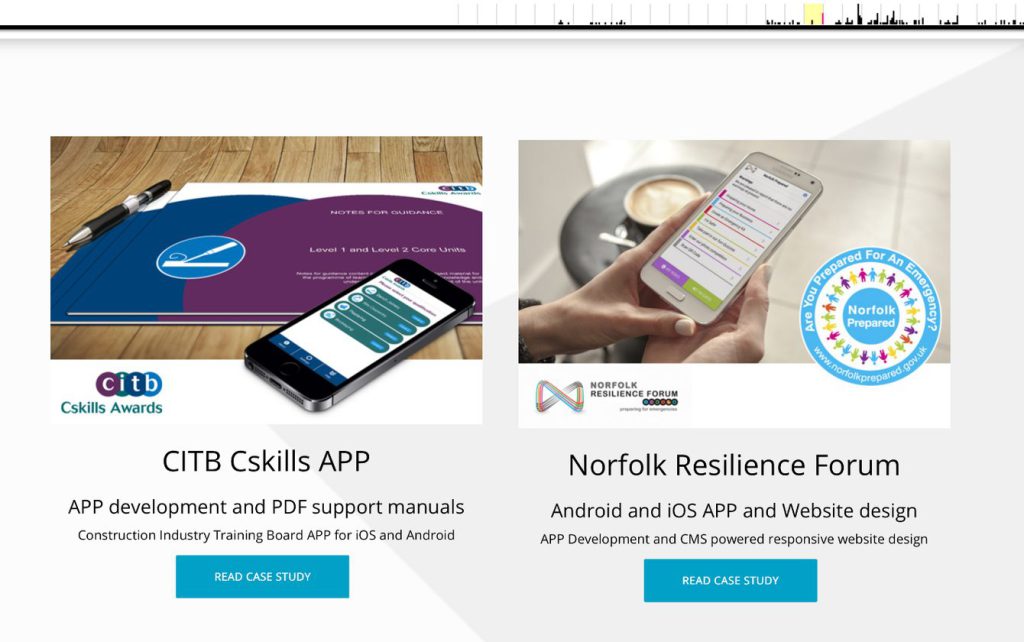
Astutech won and supported the Norfolk Fire Service website, with public education, interactive material and an incident feed. Around 2012, we won another competitive tender for the Norfolk Resilience Forum after presenting an application prototype directly to senior emergency-service representatives.
The Norfolk Prepared application and website shared an emergency-information publishing source. A separate competitive tender for CITB Cskills Awards led to a candidate practice application for iOS and Android. Astutech’s archived case study reported 1,494 installs and 4,646 completed practice tests by 22 October 2014; these are contemporary project-reported figures, not independently audited metrics.
2008–2016, overlapping other work
Prototypes, products and new opportunities
I explored geolocated motor-incident recording and later developed that work into DataDrive, presented in 2014 as a venture involving Astutech and Busseys. Another project used active RFID radio-positioning hardware: with a mast and real tagged devices at the office, I built a working tracker alongside a separate consumer mobile concept.
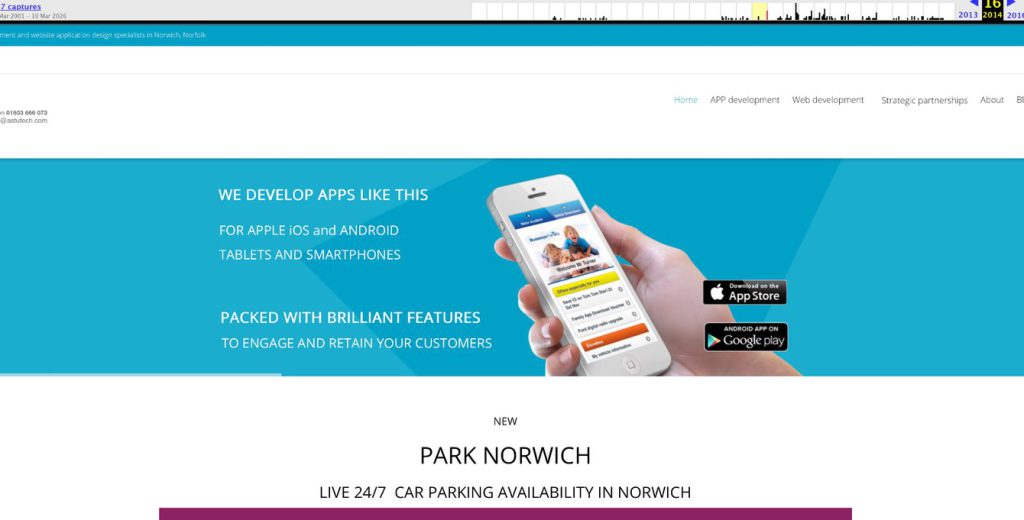
Our team also developed Park Norwich, a free application presenting live car-park availability; the original idea came from our lead developer. These projects reflect a recurring interest in taking technical capabilities and making them useful in everyday decisions.
2016–2020
Security, privacy and verifiable results
A substantial part of my work involved website security assessments, remedial engineering, recovering compromised sites and helping organisations respond to GDPR. I used repeatable assessments and third-party tools so customers could examine the results of the work.
That experience extended into organisational information-security practices and work towards ISO/IEC 27001. The distinction between a reassuring statement and evidence that can be inspected remains important to my work.
2020
Responding to an immediate need
When COVID disrupted hospitality, I developed BarWaiter, a mobile ordering product intended to make service workable under changing restrictions. It attracted interest, including discussions with representatives of Scandic Hotels about a possible wider rollout.
I also built a separate prototype for hotel cleaning assessments at their request. The wider commercial opportunity did not become a rollout, but the work demonstrated rapid response to a real operational problem.
2022–2025
Product leadership and spatial intelligence
At OSC in Norway, my responsibilities spanned product management, creative direction, user experience and architecture. I developed an experimental flood-risk digital-twin prototype to investigate how geographic information, terrain and interactive visualisation could communicate complex scenarios more effectively.
The prototype was research and exploration, not a claim of scientific validation or a completed operational flood-prediction service. I also helped introduce information-security practices informed by ISO 27001.
2025–2026
Applied AI and operational improvement
At Zegeba, I developed an AI-assisted approach to product documentation and release preparation, building a structured process around existing knowledge, screenshots, changes and human review.
The approach was used in a subsequent production release to help create consistent documentation and reduce repetitive preparation work. This developed my interest in how AI can support skilled work without becoming the authority for decisions or verification.
2026 onwards
Independent research and governed intelligence
Today, I work as an Independent Product & Systems Architect. My research with determinIQ brings together questions of understandable interfaces, deterministic analysis, provenance, privacy and evidence-led decisions.
Alongside it, I am exploring human-directed AI-assisted engineering: how software development can benefit from AI while architectural judgement, implementation authority, testing and responsibility remain with people. The work continues.
The technologies have changed. The underlying interest has not: understand the problem, make considered decisions, and turn possibilities into useful systems.
I see what you mean. From idea to reality.